Entertainment for rooms where nobody shares a first language
Visual close-up and mentalism travel better than comedy or anything verbal. The constraint is not translation — it is that timing-based material depends on a shared reference the room may not have.
Matteo Cammisa
Founder, MAGIQ. Twenty years performing close-up and stage magic.
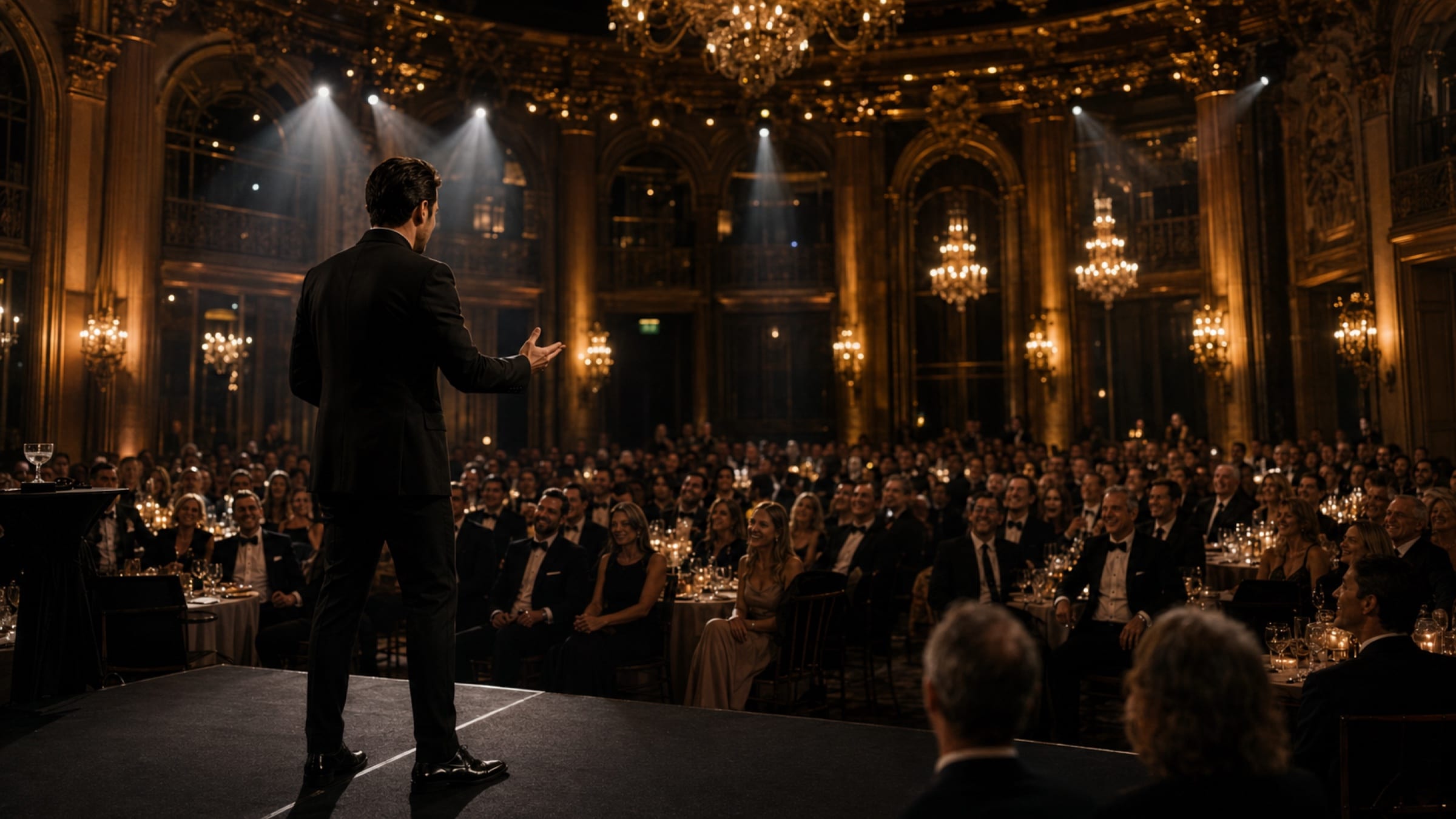
The constraint is not translation. It is that most performance depends on a shared reference — a rhythm, an assumption, a cultural joke — and a room drawn from nine countries does not have one.
What travels
- Visual close-up with borrowed objects. Coins, rings, a guest's own watch. There is no instruction to follow because the guest is holding the thing that changes.
- Manipulation on stage. Usually silent and performed to music, which removes language entirely. It works identically in any room.
- Mentalism, mostly. It depends on a setup being understood, so it needs the setup delivered clearly — but the payoff is universal because everyone knows what it means for something private to be known.
What does not
- Comedy. It travels worse than anything else in this category. Timing-based material depends on a shared expectation to break, and what is funny in one market is flat or worse in the next.
- Card magic that requires following instructions. “Remember your card, do not tell me” is four sentences of setup, and four sentences is where a mixed room loses half its attention.
- Anything built on wordplay. Obviously, and yet it is booked constantly.
A performer who works in four languages is less useful than one whose material needs none.
The question worth asking
Not “what languages do you speak”. Ask what their set looks like with no words at all, and whether they have performed it that way. A performer who has worked genuinely international rooms will have an immediate answer, because they will have had to.
The practical shape
For a room with no shared first language, the reliable combination is visual close-up during the reception and, if the evening needs a collective moment, a silent stage act rather than a spoken one.
It is a narrower field of performers than a single-language room, which is worth knowing early rather than three weeks out.
How far in advance should I book entertainment?
Eight to twelve weeks for most events, six months for a fixed-date gala or wedding — and if you are inside two weeks, call rather than write, because the shortlist changes shape at that point.
Does a luxury wedding actually need entertainment?
Not always — and when it does, it is almost never a show. The job is the gaps: the drinks hour, the turn between ceremony and dinner, the lull the photographs are taken in.
What makes entertainment work in a luxury hotel?
Consistency, not brilliance. A guest who returns monthly judges the property on the weakest night they saw — so the residency performer's real skill is being excellent the ninth week, not the first.
Would you rather we did it?
Describe the event and we will apply this framework for you, with the reasoning written down and our fee quoted before any shortlist exists.